


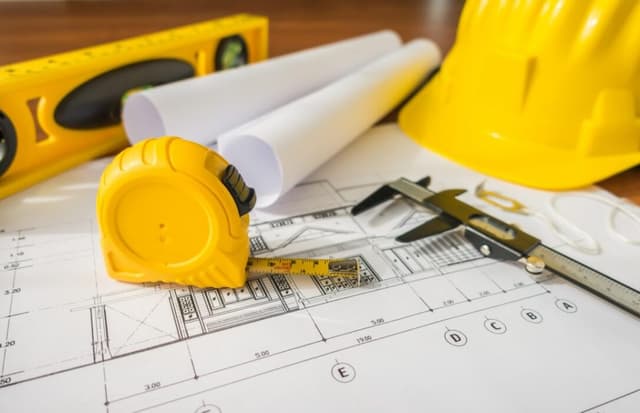
The construction industry is full of challenges that require inventive solutions. Engineers, technologists, designers, and machinists spend a substantial portion of their time developing superior designs and manufacturing practices to remain competitive. Every construction project is unique, which means that construction companies have to adapt their processes and resources to suit each project.
This continuous evolution of technologies provides ample opportunities for companies to take advantage of the R&D tax incentive credit. Research and Development activities can take place during different phases of a construction project.
If you want to check out your company eligibility for the R&D Tax Credit, please contact us!

The Architecture and Engineering sector involves the development of new and improved design and infrastructure. A&E firms routinely conduct Research and Development activities during almost every phase of the project. Neither the contract, nor payments received for contracted services necessarily disqualify the activity for the R&D credit. If there is any degree of economic risk and the right to apply the knowledge obtained through these activities, the R&D process is retained.
The Architects and Engineers must deal with application, location, environment, and weather.
All interfere in the materials will be used, eventually the method or technique should be applied. May you or not hire specialized workforce or contract third part technician or specialist.
Examples of Qualifying R&D Activities
If you want to check out your company eligibility for the R&D Tax Credit, please contact us!

The commercial airline fleet have forecasted worldwide, to grow in accelerated rate as the
aircraft manufacturers deliveries a massive technology shift over for the new generation
aircraft.
To prepare for this growth, all the original equipment manufacturer (OEM), from aircraft
manufacturer; and maintenance, repair, operation companies (MRO), must be looking to
increase efficiency through the process improvements as well.
Therefore, to align companies with distinct types of development and innovation, many
updates are required to accommodate the new demand. Research and development (R&D),
in the aviation industry, involves innovations in software, engineering, design and
manufacturing.
Check out your company eligibility for the R&D Tax Credit contacting FI Group!

Many banks are not aware of the Research and Development (R&D) tax credit program, on account of not recognizing themselves as eligible as software companies. In other cases, some organizations believes that only a portion of their activities can be qualified as innovation.
Both cases are common misconceptions pervasive throughout the business world, but innovation is more than only new inventions. Actually, almost every phase of a solution is considered an activities of R&D.
When claims are properly prepared in compliance with correct standards, the R&D tax credit can be a reliable funding source for IT solutions. Among the possibilities, any of the following activities can be considered as an R&D process:
After the idealization phase, other activities can be included, as the ones corelated to:
Once the solution is done, must be assessed, and proved:
Unlock the Value of Innovation You’re Already Funding
Your next tax-saving opportunity may already exist within the projects you’re funding today. FI Group by EPSA helps organizations uncover overlooked R&D incentives and confidently claim credits through a proven, audit-ready methodology. ➜ Contact Us